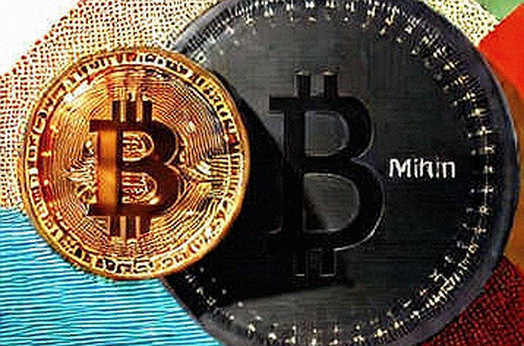
The Ledger's Longest Shadow: Europol's Quantum Warning Is a Governance Confession Disguised as a Cryptographic Alert
CryptoEagle
The European Cybercrime Centre, a unit buried inside Europol that normally hunts ransomware syndicates and darknet market operators, has released an assessment that reads less like a police bulletin and more like a confession. Cryptocurrency wallets, the report declares, are the primary risk surface for quantum attacks — the precise points at which public keys become visible, recorded, and inevitably secretable. The mathematics securing every Bitcoin address, the elliptic curve digital signature algorithm that has held the network's treasury since 2009, carries a known and dateable vulnerability. What I find more telling than the warning itself is what the document deliberately withholds: no timeline. No Q-Day estimate. No enforcement action. No emergency hard-fork recommendation. Just a quiet, methodical recommendation that exposed funds be moved before the attack arrives.
The ledger bleeds red when trust decays into code. And right now, the code still holds — but the trust is eroding from a direction we have not properly mapped.
This is not the first quantum panic to hit the crypto industry, and it will not be the last. Google's "quantum supremacy" announcement in 2019 triggered a sharp but short-lived Bitcoin correction — the market interpreted a narrow benchmark computation as the beginning of the end for elliptic curve cryptography, then recovered within weeks when the technical details landed. IBM's Eagle processor in 2021 produced similar noise. Each iteration of the quantum narrative has been pulse-based: a spike of attention, a wave of fear content, a recalibration downward. What separates the Europol report from those episodes is not the mathematics — the mathematics was settled decades ago. What separates it is the institutional source. The European Cybercrime Centre (EC3) coordinates cybercrime investigations across twenty-seven member states. Its formal publication of a quantum risk assessment aimed at cryptocurrency wallets marks the first time a major law enforcement body has adopted the quantum threat as a crypto-specific policy concern. And the document itself is written with a precision that the market's usual quantum commentators lack: it distinguishes between signature algorithms, which are fragile under Shor's algorithm, and hash functions, which face only Grover's quadratic slowdown. It explicitly reassures that cryptocurrencies will not collapse. It recommends phased migration, with exposed public keys designated as the priority risk. This report lands during a sideways, consolidating market — exactly the phase when institutions move from narrative to infrastructure. The warning is not designed to trigger a trade; it is designed to survive the quiet period and shape the next cycle's standards.
Reading it from where I sit — I spent 2024 analyzing 50,000 lines of the ECB's digital euro prototype code, tracing how central banks approach cryptographic transition planning — I recognized the institutional pattern immediately. This is not a technical bulletin. It has the structural fingerprints of a seed document: the kind of publication designed to generate follow-up regulation rather than inform immediate action. Money, in the institutional world, flows toward what is formally defined as a risk. Europol has just defined a new risk category inside the crypto asset class and given it a police identifier. The industry treats this as content; policymakers treat it as a mandate. That difference is the untold story of the report.
Now let me walk through the technical anatomy — because the specifics matter more than the headline, and most of the commentary I have seen on this topic has the details wrong.
Shor's algorithm, published in 1994, solves the discrete logarithm problem in polynomial time. ECDSA's security rests entirely on the presumed intractability of that problem on classical hardware. A sufficiently advanced quantum computer converts private key recovery from a computational nightmare into arithmetic. Bitcoin's signature layer collapses under that assumption; its hash layer does not. Mining, address hashing, and proof-of-work validation face Grover's quadratic slowdown, which is mitigated by simply doubling the output length. This is why the Europol report's careful separation of signatures from hashes matters — it is a technically literate threat model, not a panic generator.
When I encountered the report's claim that post-quantum signatures would be 10 to 120 times larger than current ECDSA signatures, I did what I always do with a number that matters: I verified it against the primary source. NIST's FIPS 204 and FIPS 205 final standards, published in August 2024, list the approved signatures. ECDSA under DER encoding produces roughly 71 to 73 bytes. Falcon-512, the lattice-based signature scheme, produces approximately 666 bytes — about ten times larger. ML-DSA-44, derived from what was originally called CRYSTALS-Dilithium, produces roughly 2,420 bytes — about thirty-eight times larger. SLH-DSA-128s, the stateless hash-based scheme, produces approximately 7,856 bytes — about one hundred and twenty times larger. The range in the Europol report aligns almost exactly with the NIST specifications. Whoever drafted that section performed real verification, or commissioned it. That small detail changes how I read the entire document — and it changes how you should price the risk. The figure is not rhetorical inflation. It is a precisely calculated engineering constraint with direct consequences for block space economics.
But the mathematical facts, while necessary, are not where the threat model becomes dangerous. The danger lives in a property unique to blockchains: their inability to forget. Traditional cryptographic systems can rotate keys administratively. If a European bank's signing key is exposed, the institution generates a new one, updates its certificates, and moves forward. The old key material is revoked through centralized processes. A blockchain cannot do this. Its entire security narrative rests on a history that cannot be rewritten. Every public key that has ever touched Bitcoin's chain is permanently exposed, replicated across tens of thousands of nodes, archived by explorers, indexed by analytics firms, stamped into digital permanence by the consensus engine. This is already true for P2PK addresses from the Satoshi era, whose public keys sit in the UTXO set in full view. It is true for reused addresses, which advertise their public keys with every signature. It applies to Taproot outputs, which by design expose the script path at the spending condition layer. The transparency that makes Bitcoin auditable is the same property that makes its users permanently vulnerable. There is no post-hoc rotation policy on a ledger that cannot rewrite itself.
The "Harvest Now, Decrypt Later" (HNDL) model that Europol mentions deserves a blockchain-specific extension. In classical settings, HNDL requires an adversary to collect encrypted traffic before the quantum machine exists. That collection is expensive, requires extensive infrastructure, and depends on targeting decisions made years in advance. On a public ledger, none of that applies. The harvesting was completed the moment the first block was mined. The exposed keys are stored, indexed, timestamped, and verifiably public — a data trove that no intelligence agency could have dreamed of assembling under traditional interception programs. The Europol report's cooling phrase — "no clear evidence that HNDL is being systematically used" — is the most important sentence in the document. It calibrates the threat precisely: the collection problem is already solved by the nature of the ledger; only the computation remains. We are auditing the ghost in the machine's soul, and the ghost has been leaving fingerprints in every block since 2009. The attacker's database is the blockchain itself.
Now consider the second-order economic effects, which the market narrative almost completely ignores. A migration to post-quantum signatures is not a software update. It is a direct, structural tax on block space. On Bitcoin, where the one-megabyte block cap anchors a scarce fee market, a ten-to-hundred-and-twenty-fold expansion of signature size compresses effective transaction throughput by the same ratio. The blocks that currently carry three thousand transactions will carry three hundred — or thirty. The fee market distorts. Confirmation times stretch. Miners, whose revenue model depends on fee pressure elasticities, face a re-pricing of their entire cost structure. The fee market becomes a bidding war for scarce block space; routine on-chain activity migrates to private channels or layered solutions — and the public chain that survives the migration may look nothing like the Bitcoin that defined the last cycle. Layer 2 networks that batch thousands of transactions into single settlement anchors inherit the same curve, because their security references the same secp256k1 cryptographic layer. The migration is not merely cryptographic — it is an economic shock that cascades through every layer of the stack.
And here is the part of the migration literature that the report presumes rather than addresses. Bitcoin has no core development authority with the capacity to mandate a client upgrade. Its governance model is a diffuse, chaotic consensus process requiring simultaneous alignment of node operators, miners, wallet vendors, custody providers, and users scattered across every time zone. The Block Size War of 2017 split the community over a single megabyte of capacity. Taproot required years of BIP refinement and still encountered signaling controversy. A post-quantum migration involves changing Bitcoin's identity-defining signature algorithm — an alteration so deep that it rewrites the network's security assumptions, balloons transaction sizes, and forces the entire software ecosystem to redesign key derivation architectures. The report's recommendation for phased migration glides past this reality. Phases require actors. Actors require incentives. Incentives require alignment. Decentralized systems excel at resisting coercion, but they are catastrophically bad at executing synchronized transitions. This is the coordination problem that no cryptographic standard can solve.
There is an experiential warning I keep circling back to when I analyze this: during the FTX collapse in 2022, I spent weeks reconstructing the hidden leverage layers inside Alameda Research's balance sheet from on-chain data. The structural failure was not opaque — it was mathematically visible if you knew where to look. The same forensic habit applies here. The exposed Bitcoin addresses — the dormant P2PK coins, the reused-address outputs, the Taproot UTXOs — are precisely quantifiable. When I see market commentators describing the quantum threat as an undated abstraction while holding several million BTC in permanently exposed addresses, I recognize a mismatch between narrative and structure. The market has priced the idea that quantum risk is far away. The ledger has already priced nothing, because the ledger does not price — it persists. The discount, when it comes, will be a slow-rolling overhang, not a price shock — the equivalent of the Mt. Gox distribution or government auction cycles. The assets won't move; their perceived value will erode at the margin, year after year, until the threat either materializes or the migration renders it moot.
The wallet layer is where Europol's framing needs a critical correction. The report identifies wallets as the risk point — and that is accurate but incomplete. The risk is not the wallet as a device; it is the key generation and exposure architecture that wallets embody. Most self-hosted wallets generate a new receiving address by default, which necessarily broadcasts public key material to the network. Hardware wallets — Ledger, Trezor, and their counterparts — are designed for cold storage, but they cannot prevent public key exposure at the moment a spend occurs, because spending requires a signature and a signature reveals the key. The migration path for wallet software is operationally brutal: every address-derived public key must be retired, every balance must be swept into post-quantum wallets, every integration with exchanges and DeFi applications must be coordinated. Token vaults. Custody concentration. Institutional key management hierarchies. All of these must transition in sequence. The user base with the largest exposure — dormant holders from the Satoshi era — is the least capable of executing that transition. And the custodial giants holding millions of coins in hot and cold wallets will effectively determine the industry's migration pace, because their key management upgrades set the standard whether users consent or not.
This is where I take the contrarian turn. My primary divergence from the market's likely read is this: the quantum computer itself is not the danger. The danger is the market's belief that the quantum computer is arriving tomorrow. We saw the psychological template after Google's 2019 announcement — a spike of fear, a fast recovery, a narrative that was technically disproven on details. The same pattern will repeat, but with one difference at each iteration: the distance between the narrative and the hardware narrows. When a credible laboratory demonstrates error-corrected logical qubits at operational scale, the market will abandon nuance. It will price the narrative. The exposed coins will carry a risk premium that nobody has yet discounted. The most dangerous moment for the system will be the moment when the belief becomes concentrated enough to trigger a migration stampede — a coordinated rush of legacy sweeps from old addresses, transaction flooding, and fee market chaos that itself destabilizes the network before any quantum machine ever touches it. The black swan here is not the machine. It is the conviction that the machine is imminent.
The second contrarian observation concerns the report's institutional function. The crypto market will read this as "quantum FUD" — one more iteration of a fear narrative that has historically failed to produce lasting moves. That read is analytically wrong in a specific, testable way. When a police coordination body issues a formal risk assessment across twenty-seven member states, it is not producing content for crypto Twitter. It is activating a policy chain. The logical next steps — amendments to the NIS2 cybersecurity directive, technical standards under MiCA, binding custodial requirements for virtual asset service providers — are not speculation. They are the standard institutional sequence that follows a formally registered systemic threat. The report will not move a single candle today. But it will reshape the risk premium architecture of European crypto custody tomorrow. It will force wallet providers to publish post-quantum roadmaps. It will require exchanges to demonstrate migration capabilities in audits. And it will do all of this without declaring a single deadline, because the institution does not need deadlines — it needs the process to begin.
From my experience inside the ECB pilot work, I can confirm this pattern. The digital euro prototype never declared an emergency. It published standards, ran test scenarios, and generated working group mandates. Every technical assessment in the institutional world follows the same grammar. This report is the grammar particle that precedes legislation. Track the working groups it spawns within the next eighteen months — that will be the empirical confirmation of this read.
What, then, is the honest takeaway? I track three leading indicators for this threat's materialization. The first is error-corrected logical qubit counts — when a credible program demonstrates thousands of operational logical qubits, the threat timeline compresses from "eventually" to "within our planning horizon." The second is regulatory language — NIST, national security agencies, or European institutions issuing recommended deprecation timelines for legacy ECDSA usage. The third is the movement of dormant Bitcoin addresses. Long-sleeping wallets that stir after a decade of silence are not necessarily accumulating whales; they are the cryptographic equivalent of a smoke detector triggering. When I see sudden activation among Satoshi-era P2PK outputs, the correct analytical response will be: someone with superior information has begun to act.
The keys we buried in the chain are now the weapons aimed at us. The mathematics that made the ledger trustworthy — the same mathematics that guarantees its immutability — is now the vector through which its residents can be dismantled. The ledger that cannot forget is also the ledger that cannot protect its inhabitants when the locks change. Europol has delivered a measured, institutionally significant warning. It is neither apocalypse nor irrelevance. It is the first formal acknowledgment from European law enforcement that the future has a schedule, and that the schedule requires building trust in mechanisms not yet designed. That is not a death sentence. It is a construction plan — if the industry has the discipline to follow it. We are auditing the ghost in the machine's soul. And the ghost is asking a question: when the mathematics breaks, will the community that built its trust on that mathematics find the coordination to rebuild it?
Related

The 4F² Mirage: What CXMT's Architectural Leap Reveals About China's Memory Ambitions
2026-10-13
The Zero-Save Illusion: Joan García's Clean Sheet and the Hollow Promise of Sports Crypto
2026-07-12
The 2026 World Cup Crypto Mirage: Why the Hype Is Already Priced In, but the Reality Isn't
2026-07-12
The MiCA Migration Trap: How Regulation Created a 1,400% Surge in Impersonation Scams
2026-08-11
Allbridge Core Flash Loan Attack Exposes Fatal Flaws: A Post-Mortem Analysis
2026-07-20
The Strait of Hormuz Is Not a Blockchain, but It’s Teaching Crypto a Hard Lesson About Narrative Fragility
2026-07-09
The Fed's Dovish Pivot Priced in Stablecoin Flows: An On-Chain Autopsy
2026-08-15
The 4% Yield Paradox: Weak Treasury Demand Is Crypto's Loudest Macro Signal
2026-09-22
Medal and Kill Switch: Zelensky Just Decorated the Man Who Controls Ukraine's Battlefield
2026-08-27
The Data Gap: When Blockchain Analysis Frameworks Output Null
2026-08-25