At 4:40 a.m. Mexico City time my phone lit up before my alarm did. Brent had gapped. WTI was printing three percent higher, and beneath it scrolled the kind of headline that historically moves crude by fifteen: a pipeline shut, a tanker burning, a diplomatic meeting postponed without explanation.
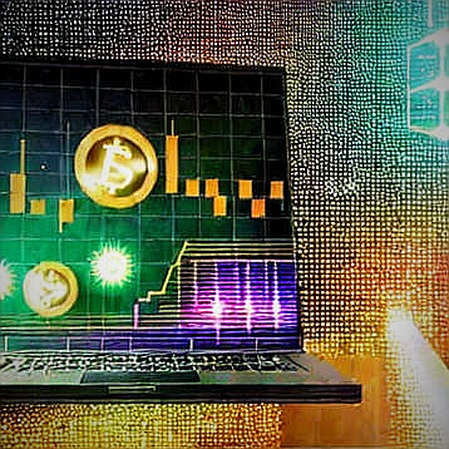
I sat on the edge of the bed with the laptop already open, watching two screens that fundamentally disagree about what time it is — the crude tape, which discovers price on a five-day rhythm set by London and New York, and the crypto tape, which had been trading for nine straight hours.
Bitcoin was flat. Funding on the major offshore perpetual venues had barely twitched. The order books showed a bid that looked like a shrug. And somewhere in Istanbul, the USDT/TRY premium was ticking up a fraction of a percent, the way it always does when oil importers start doing currency arithmetic in their heads.
That split screen is where I do my work now. Following the pulse where liquidity breathes free means you watch the market that never closes first, and then you ask why the market that does close is still asleep.
What the source actually said — and how thin it is
Here are the facts as given, before I build anything on top of them.
Crude rose roughly 3% in Asian-hours trading. A drone launched from Iraqi territory struck Saudi Arabia's East-West pipeline. A tanker was attacked. The UK Maritime Trade Operations center said the maritime security situation in the region remains dangerous. And an Oman-hosted diplomatic meeting on Hormuz Strait conditions was abruptly postponed.

The price data came from Bitget — a crypto exchange, not an energy desk. No year was attached to the events. And the stated capacity of the East-West line, seven million barrels per day, does not match the figure most energy analysts carry, which is closer to five million after successive expansions, with original design capacity around 3.2 million. Seven million was a planning target, not a current throughput number.
That is not pedantry. If you build a supply-shock model on a seven-million-barrel base and the real number is five, you overstate the disruption by 40% and you misprice every downstream asset, including the ones I trade.
Now the part that matters to a macro reader.
The East-West pipeline, known in the trade as Petroline, was built in the 1980s during the Iran-Iraq tanker war for exactly one purpose: to let Saudi crude reach the Red Sea at Yanbu without passing through the Strait of Hormuz. It is a bypass. It is the redundancy layer on top of the single most important chokepoint in the global energy system — roughly 20 million barrels per day of seaborne flow. When the market prices Hormuz risk, it prices a probability that the strait becomes unusable, and it discounts that probability by the existence of alternatives. Petroline is the biggest alternative.
So read the target selection again. This was not a strike on a random oilfield. It was a strike on the thing that makes the chokepoint less of a chokepoint. Trace that logic and you arrive somewhere uncomfortable: hitting the backup does not reduce anyone's leverage over Hormuz. It increases it.
And this is why the episode belongs on a crypto desk at all. When physical infrastructure breaks on a Sunday, the only continuous price discovery in the world runs on-chain and in offshore perpetuals. The 2019 Abqaiq strike landed on a Saturday; back then the Sunday-night crypto tape was the only instrument quoting a forward view before Asian cash markets opened. That was six years ago. In 2026 we have a full stack — perps with deep offshore liquidity, tokenized commodity exposure, prediction markets with real volume, and chain-level stablecoin flow data that functions as a live current-account stress monitor. That is the lens I am using.
The asymmetry that should scare you more than the 3%
The economics of this kind of attack are obscene in a way that defense ministries still have not internalized. A one-way attack drone assembled from commercial components costs somewhere between a few thousand and a few tens of thousands of dollars. Petroline cost tens of billions and moves millions of barrels a day. Cheap offense, priceless target, non-attributable launch — that is the defining military-economic fact of this decade, and the crypto industry has a version of it everybody keeps ignoring: the cost of attacking a system is collapsing faster than the cost of defending it.
The reason is structural. Defense has to be perfect and permanent. Offense has to be lucky once.
When people talk about critical infrastructure security as a procurement category, what they mean in practice is counter-drone systems, short-range air defense, electronic warfare, and hardened industrial control layers. I spent months in 2024 reading the compliance and custody architecture behind the institutional vehicles entering this market, and the same lesson kept reappearing on both sides of that work: the expensive part is never the asset, it is the assurance wrapped around the asset. A pipeline is steel and pumps. What you are actually buying with a pipeline is a probabilistic guarantee that the molecules move. Strike once and you do not destroy the steel — you destroy the guarantee. The premium on that guarantee reprices instantly, and globally.
That is what the 3% candle is pricing. Not barrels. Certainty.
What the weekend perp tape told you ten hours earlier
Here is the technical part, and it is where my day job and my side project converge.
Through 2025 and into 2026 I built small AI-driven trading bots that pulled real-time data through decentralized oracle networks — price feeds, on-chain flows, funding rates. The bots ran deliberately small. We were not running size; we were running experiments on how autonomous agents react to exogenous shocks, and specifically where their feature weights go wrong.
On a weekend event like this one, three features carry almost all the signal weight. Funding on the major offshore perpetual venues matters most: if the shock is being priced as a genuine supply event, funding flips and stays flipped, and if it is being priced as noise, funding mean-reverts within hours. The perp-versus-spot basis is the second tell, because contango widening on crypto during an oil event is almost always a leverage story rather than a commodity story, and a flat basis means the marginal buyer never showed up. The third is relative behavior between large-cap assets: in a true risk-off, everything correlates to one, and divergence tells you the market is treating the event as sector-specific.

Ten hours before the cash session opened, all three said the same thing. Localized. Contained. No contagion. The bots were right, and the crude tape confirmed it. Where human energy meets algorithmic precision, the interesting question is not who is faster — it is who is willing to hold a position overnight on a signal the humans cannot yet see. The honest answer is that almost nobody is. Our bots were flat by the middle of the week and I spent the remainder of it reading insurance filings.
There is a second instrument worth naming here: prediction markets. On-chain odds on Hormuz closure contracts give you a crowd-sourced probability that options desks will not quote you directly. Comparing prediction-market implied probability against option-implied probability on Brent is one of the cleanest ways to see whether the physically informed crowd and the financially informed crowd disagree. In this event they did not disagree much. Both read it as contained. That consensus is worth filing away, because it is the assumption everything else is leaning on.
Stablecoin premiums are the real-time EM stress gauge
Almost nobody watches this. Everybody should.
The countries most exposed to an oil risk premium are, nearly without exception, the countries where dollar-denominated tokens have already become the practical savings instrument: Turkey, Argentina, Nigeria, Egypt, Pakistan, Lebanon. These are oil importers, so a sustained risk premium shows up in the current account within a quarter. The currency weakens. The central bank either burns reserves or lets the effective rate drift. Households, who have watched this movie three times already, move first.
You can watch them move. The USDT/TRY or USDT/NGN premium at local over-the-counter desks, the on-chain volume running through regional corridors, the spread between the official rate and the rate people actually transact at — that is a real-time current account stress reading that no statistical release will give you for six weeks.
Here in Mexico the same dynamic runs at the margin. Remittance corridors, the peso, Pemex's own hedging program — different structure, same physics. The reason crypto payments grew in these markets has nothing to do with ideology and everything to do with arithmetic: when the local currency's forward curve is a straight line down, a dollar token becomes the only savings account that holds its value. Oil shocks are one of the inputs to that curve. When Brent gaps 3% in Asian hours, the stablecoin desk is not a bystander. It is the first place the second-order effect lands.
I would argue the stablecoin premium is now a better real-time EM stress indicator than most of the sovereign CDS market, simply because it clears continuously and its users have a direct financial incentive to be right.
Where the on-chain oil trade settles — and why it gets more expensive
The tokenized commodity thesis has a settlement-layer problem that the pitch decks skip.
Every serious attempt to put barrels, freight claims, or commodity receivables on-chain lands on a rollup, because nobody pays mainnet fees for a trade whose notional already carries a spread. That means the marginal cost of the entire real-world-asset category is set by blobspace.
Post-Dencun, blobspace was cheap enough that this felt free. It will not stay that way. Blob demand from rollups is on a path to saturate available blockspace within roughly two years, and when the fee market finally turns on, every rollup's cost basis roughly doubles again. The tokenized commodity market is therefore being built on a subsidy that expires. If you are modeling the unit economics of an on-chain energy derivative today and you are not modeling the blob fee curve two years out, you are modeling a business that stops working right around the moment it starts to matter.
There is a governance layer stacked on top of that, and it is worse.
Most of the energy and commodity DAOs I have watched try to hold real-world claims have no meaningful legal personality. A multisig and a chat group is not a legal wrapper. If the custodian of a tokenized barrel defaults, or a chartered vessel is seized, or a pipeline-linked receivable goes bad, the token holders do not have limited liability — they have exposure with no bankruptcy remoteness and no corporate veil. I have watched very smart people structure a physical commodity position with three signatures and no counsel. The only reason nothing has broken is that nothing bad has happened yet.
When a DAO insists it is just code, remember that code has never once appeared in a courtroom on its own behalf.
The physical coupling nobody prices: oil, power, hashrate
One more thread, because it keeps this honest.
Bitcoin miners are the only large-scale industrial energy buyer that is fully price-elastic and can respond to a signal in minutes. When regional power prices move because the oil complex repriced, marginal hashrate moves with them — curtailment in Texas, flare-gas operations in producing regions shifting economics, hosting contracts getting renegotiated. That is a real coupling between the energy complex and the crypto base layer, and it runs both ways. A sustained risk premium is a hashrate cost shock with a two-to-six-week lag. Watch it if you want physical confirmation that a risk premium is real rather than rhetorical.
The contrarian read
The comfortable narrative when something like this happens is that crypto is the geopolitical hedge, that bitcoin is digital gold, that capital rotates into hard assets when the world gets loud. It is an appealing story and the tape does not support it.
My contrarian read is this: the most important number in this event is not 3%. It is that the market moved 3% at all. Six years ago a strike on Saudi crude infrastructure opened 15% to 19% higher. This time, a strike on the redundancy layer — the piece of infrastructure whose entire reason for existing is to make the worst case survivable — moved the tape a third as much. Either the world is genuinely better supplied, or the market has lost the capacity to be surprised.
If it is the second, then the risk is not the event. The risk is the accumulated numbness, and numbness releases non-linearly. Surviving the noise to hear the signal is easy when the noise is loud. It is much harder when the noise has gone quiet and everyone has decided that quiet means safe.
And the decoupling thesis — the one I actually believe in — is being traded on the wrong side. Crypto is not decoupling from oil. It is decoupling from the five-day clock and the settlement calendar, from an architecture that requires a market to be open before a price can exist. The decoupling that matters is the household in Lagos or Buenos Aires stepping outside the domestic banking system permanently, not the correlation coefficient between bitcoin and Brent drifting from 0.4 to 0.2. The market keeps pricing the second one. The first one keeps compounding.
Where this leaves a macro reader
Two information nodes will decide whether this was a scare or an opening move: who gets blamed for the launch from Iraqi territory, and whether the Oman channel is rescheduled or cancelled. Postponed is the only word in the whole episode that suggests dialogue still exists. Cancelled is a different world.
Then watch three numbers, none of which is the oil price. The emerging-market stablecoin premium. The persistence, not the level, of perpetual funding. And the gap between prediction-market odds and option-implied probability on a Hormuz disruption — because the moment those two diverge is the moment one of the crowds knows something the other has not learned yet.
Finding stillness in the market is a discipline worth cultivating. Mistaking stillness for safety is how you get run over.