The data is sparse. One man, charged in Australia, accused of attempting to relay Ukrainian military intelligence to Russian operatives. That is the raw fact. No names, no details on the method of communication, no specifics on the intelligence itself.
Yet, for a blockchain analyst, the gaps are the signal.
The response from Australian authorities is not a surprise. The Australian Security Intelligence Organisation (ASIO) and the Australian Federal Police have been steadily increasing their counter-foreign interference capabilities, particularly since the 2022 invasion of Ukraine. The legal framework—the Criminal Code Act 1914 and the Foreign Influence Transparency Scheme—is well-established.
But the context matters. This is not a random act of espionage. It is a microcosm of a larger trend: the globalisation of the Ukraine conflict. The war is no longer confined to trenches in Donetsk. It has become a systemic, whole-of-government campaign that stretches from Washington to Canberra, from Brussels to Tokyo.
Australia, as a member of the Five Eyes intelligence alliance, has taken on a role far beyond its geographic proximity. Its legal actions are not merely domestic; they are signals of a coordinated alliance response. The message is clear: the West will use every tool, including criminal prosecution, to disrupt Russian intelligence networks, even those operating in the Pacific.
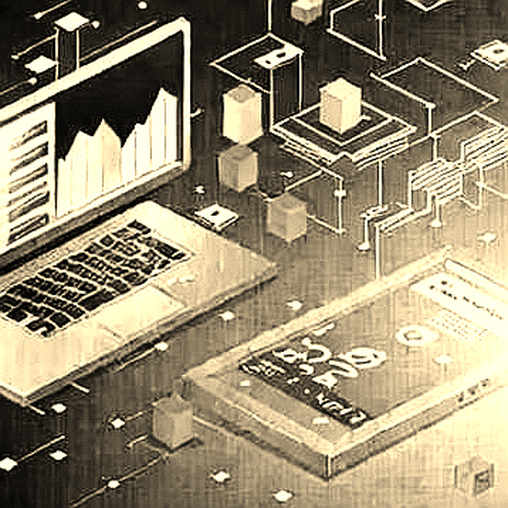
From my experience auditing DeFi protocols, I have learned that code does not lie, but it does leave traces. The same principle applies to crypto-espionage. The man in this case likely used encrypted messaging apps, maybe Signal or Telegram. But the financial trail—the movement of funds to pay for data, the purchase of hardware, the use of mixers or privacy coins—leaves a permanent record on the blockchain.
In 2020, during my yield farming experiments, I forked the Compound source code to understand its interest rate models. I ran local nodes, simulated transactions, and tracked every wei. The same forensic approach is now being applied by intelligence agencies. They are not just reading encrypted messages; they are analysing the metadata of on-chain transactions. They are looking for patterns: frequent small transactions to a specific wallet, the use of a particular bridge, the timing of trades that correlate with known intelligence leaks.
Trust is verified, never assumed. This is not just a motto for smart contracts. It is the operational doctrine of modern counterintelligence. The Australian authorities are not assuming the man is guilty; they are building a case on verifiable evidence. And that evidence, increasingly, will come from the blockchain.
The core insight here is the convergence of two worlds: the traditional game of espionage and the immutable ledger of crypto. Espionage has always relied on secrecy and plausible deniability. Crypto was designed to provide exactly that. But the same properties that make Bitcoin pseudonymous also make it transparent. Every transaction is public. Every wallet can be tracked. The illusion of anonymity is a bug, not a feature.
Consider the hypothetical: the man could have been paid in Bitcoin or Monero. If he used Bitcoin, the trail is there. If he used Monero, the privacy might hold, but the transaction graph is still visible to sophisticated analysis. The Five Eyes agencies have dedicated units for blockchain analysis. They are using tools like Chainalysis, Elliptic, and CipherTrace. They are also developing their own proprietary methods.
Yield is a symptom, not the cure. In DeFi, yield farming attracts liquidity but hides risk. In espionage, the yield is information. The risk is exposure. The Australian case is a reminder that the cure for hostile intelligence is not just encryption, but systemic verification. The blockchain provides a public ledger that can be audited by anyone. But it also provides a permanent record that can be subpoenaed, analysed, and used as evidence.
The contrarian angle is that the blockchain is not a safe haven for spies. Many in the crypto community believe that privacy coins or encrypted messaging are sufficient to evade detection. The data shows otherwise. In 2023, the US Department of Justice indicted several individuals for using crypto to launder funds for North Korean hackers. The on-chain analysis was the core of the evidence. The same will happen here.
Governance is the art of managing disagreement. In DAOs, we manage disagreement through voting and proposals. In geopolitics, disagreements are managed through sanctions, prosecutions, and intelligence operations. The Australian case is a disagreement between Russia and the West, played out through a legal proxy. The blockchain is the neutral ground where the evidence lives.
The takeaway is forward-looking. The next five years will see a tightening of the legal boundaries around crypto and anonymous communication. The Australian case is a test case. If the prosecution relies on blockchain analysis, it will set a precedent. The legal framework will adapt. The technology will adapt. The cat-and-mouse game will continue.
But the fundamental truth remains: Code does not lie, but it does leave traces. The blockchain is a machine for producing truth. The question is not whether the truth can be hidden, but whether the cost of hiding it is worth the risk. For the man in Australia, the cost may be high. For the rest of us, the lesson is clear: sovereignty is built on verifiable data, not on promises.
The balance of power in the information age shifts from those who control secrets to those who can verify facts. The blockchain is the ultimate verification tool. And the spies are learning that the hard way.